
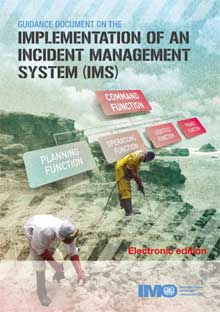
Description
This e-reader file is in EBK format and requires the downloading of our free, updated e-reader software called ‘The IMO Bookshelf’ to view the file. Once you have purchased this title you must go to ‘My Account / Downloads’ and then ‘E-books, E-reader files & Subscriptions’. You will then be transferred to our Virtual Publications site where you can click on the product hyperlink and follow 3 easy steps to access your title.
For detailed instruction please copy and paste this link www.imo.org/Publications/Documents/FAQ/E-reader_instructions_page.pdf. Please be aware that the e-reader software and any purchased titles are locked to a single computer. Only 75% of the text can be printed per day and it cannot be printed as a pdf.The e-reader software is for Windows use and MAC users need to use a Windows emulator (eg Boot Camp or Parallels Desktop) in order to view the files.
When purchasing more than one digital copy, a 50% discount applies for each additional copy bought per site (i.e. office, terminal, ship or port) at point of purchase. To receive your multi-licence discount please email [email protected].
This publication, prepared by the OPRC-HNS Technical Group and approved by IMO’s Marine Environmental Protection Committee, provides guidance on the establishment of an incident management system (IMS) for marine pollution incidents.
An established IMS provides for the safe, effective and efficient management and deployment of resources for all types of emergency incidents. It is essential for effective pollution incident management, providing a clear command structure and well-defined roles and responsibilities within an optimal span-of-control. The IMS is intended to be staffed and operated by qualified personnel from any agency and is scalable so that it can adapt organizationally based on the needs of the incident.
This Guidance document would ideally be used during the contingency planning process in conjunction with the IMO Manual on Oil Pollution, Section II – Contingency Planning and Section IV – Combating Oil Spills.
 Chat Now